k
By @beauties · 31/10/2026 11:11 PM
♥ 0 likes↓ 0 dislikes◉ 3 views
Primary prompt
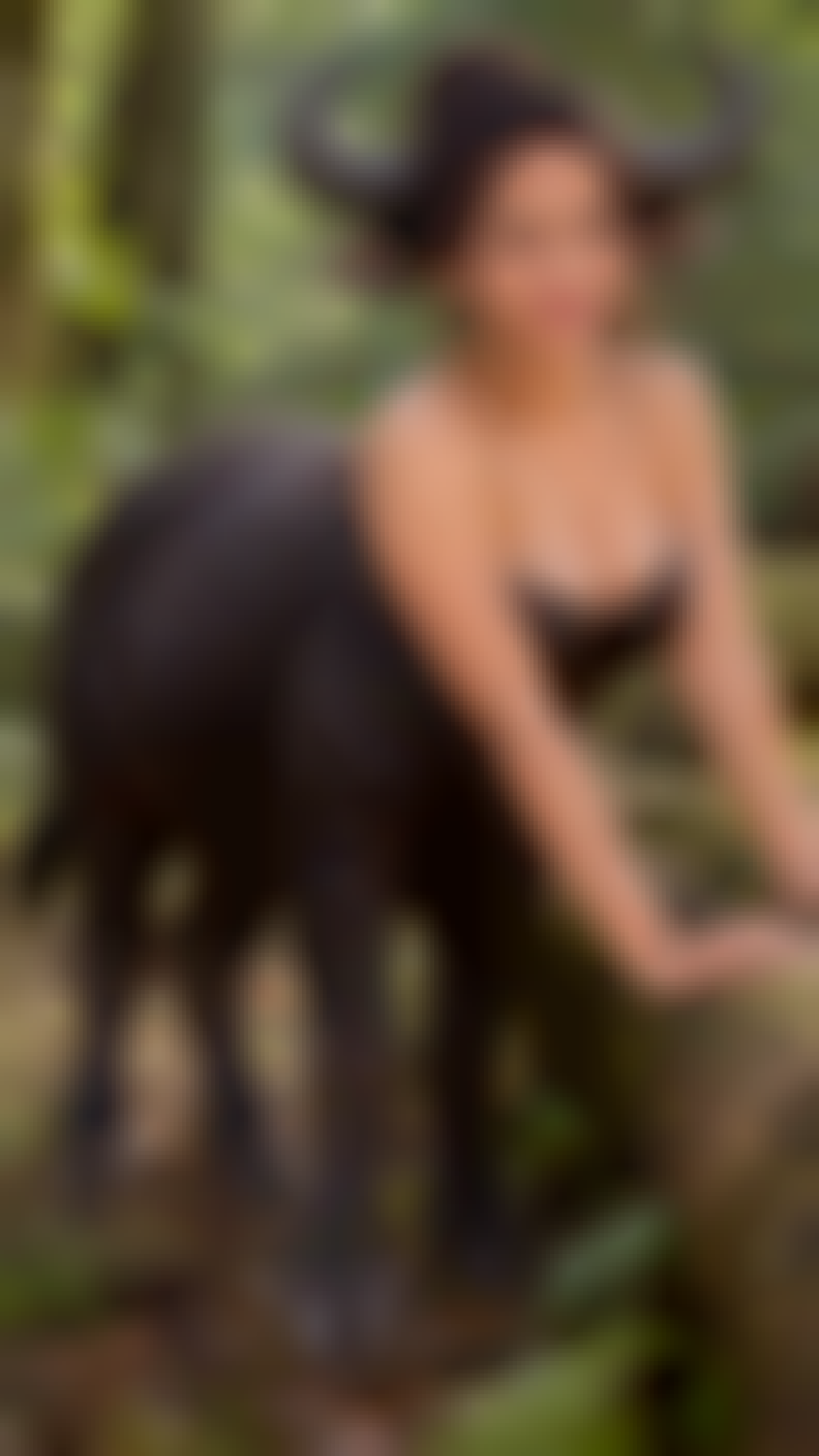
Create an ultra-photorealistic, full-body vertical 9:16 photograph of an adult woman biologically fused with a powerful female water buffalo, forming a believable human–buffalo hybrid. Use the uploaded image as the sole facial identity reference, preserving her recognizable face, human eyes, original skin tone, facial proportions, natural skin texture, and gentle, soft smile.
1. Facial Identity and Human Features
Preserve the woman's recognizable facial identity with maximum fidelity. Retain her natural facial structure, eyebrows, nose, lips, cheeks, eyes, and realistic skin pores. Her expression should be calm, friendly, and confident, with a subtle smile directed toward the camera. Her dark black hair is swept into a high bun, with a few natural loose strands around her temples. Small, anatomically integrated buffalo ears emerge from the sides of her head, blending naturally with her human hairline and skull structure.
2. Human–Buffalo Biological Fusion
Her upper body retains a realistic human head, neck, shoulders, arms, hands, and torso, while the lower torso and pelvis transition seamlessly into the robust body of a female water buffalo. The transformation must appear biological rather than a costume, with naturally continuous skin, fur, muscle structure, and anatomical transitions.
Her body features a powerful, rounded buffalo torso covered in short, dense, dark charcoal-black fur, with subtle variations in texture and direction. The fusion between human and buffalo anatomy should be smooth and physically convincing, without visible seams, artificial attachments, or mechanical components.
3. Buffalo Head Characteristics and Horns
Incorporate authentic female water buffalo characteristics into the hybrid's head and upper anatomy while keeping her human face clearly recognizable. Two substantial, backward-curving, crescent-shaped black buffalo horns emerge symmetrically from the upper sides of her head, with realistic ridged keratin texture, natural curvature, and subtle highlights. Include small rounded buffalo ears, realistic ear interiors, and fine dark hair around their bases.
Her facial appearance remains predominantly human; do not replace her human nose, mouth, or eyes with a complete animal muzzle. The buffalo characteristics should complement her face without obscuring her identity.
4. Buffalo Body and Four-Leg Anatomy
The hybrid has four powerful, anatomically believable buffalo legs emerging from the fused animal torso, separate from her two human arms. Each buffalo leg features realistic musculature, short coarse black fur, natural joint placement, and broad, cloven hooves with convincing keratin texture.
The four buffalo legs should be arranged symmetrically and proportionately, with believable weight distribution and natural contact with the ground. The human arms remain clearly distinguishable, ending in realistic human hands with natural fingers. Avoid duplicated limbs, malformed joints, extra hooves, or confusing overlaps.
5. Pose and Composition
Position the buffalo woman in a low, balanced crouch beside a moss-covered fallen tree in a lush, shaded forest. Her human hands rest gently on the rough tree bark for balance, while her four buffalo legs support the powerful animal portion of her body. Her head is turned toward the camera, maintaining direct eye contact and a gentle, friendly smile.
Capture the complete hybrid from the top of her horns to the tips of all visible hooves. Keep the human face, torso, arms, buffalo body, and four legs clearly visible within the vertical frame. The pose must feel physically grounded, natural, and stable.
6. Surface Textures and Realism
Render extremely detailed human skin pores, delicate facial hairs, natural hair strands, short buffalo fur, individual whiskers around the animal features, layered horn ridges, realistic hoof surfaces, and subtle skin-to-fur transitions. Add a faint sheen of natural moisture to the buffalo fur and horns, with tiny water droplets on nearby vegetation.
Use physically believable shadows, natural reflections, realistic anatomy, and subtle imperfections found in real living organisms. Every surface should have its own distinct texture: soft human skin, coarse animal fur, hard keratin horns, and solid cloven hooves.
7. Environment and Lighting
Set the scene in a moody, richly textured woodland with a mossy fallen tree, damp bark, green moss, fallen leaves, ferns, and soft forest undergrowth. Use diffused natural daylight filtering through the canopy, with gentle rim lighting outlining her horns, hair, shoulders, and dark fur. Maintain realistic shadows and balanced HDR exposure, with a softly blurred forest background that does not distract from the subject.
8. Camera and Photographic Style
Full-body vertical 9:16 composition, realistic smartphone photography inspired by the iPhone Pro camera, high-resolution HDR detail, natural color reproduction, lifelike contrast, realistic…