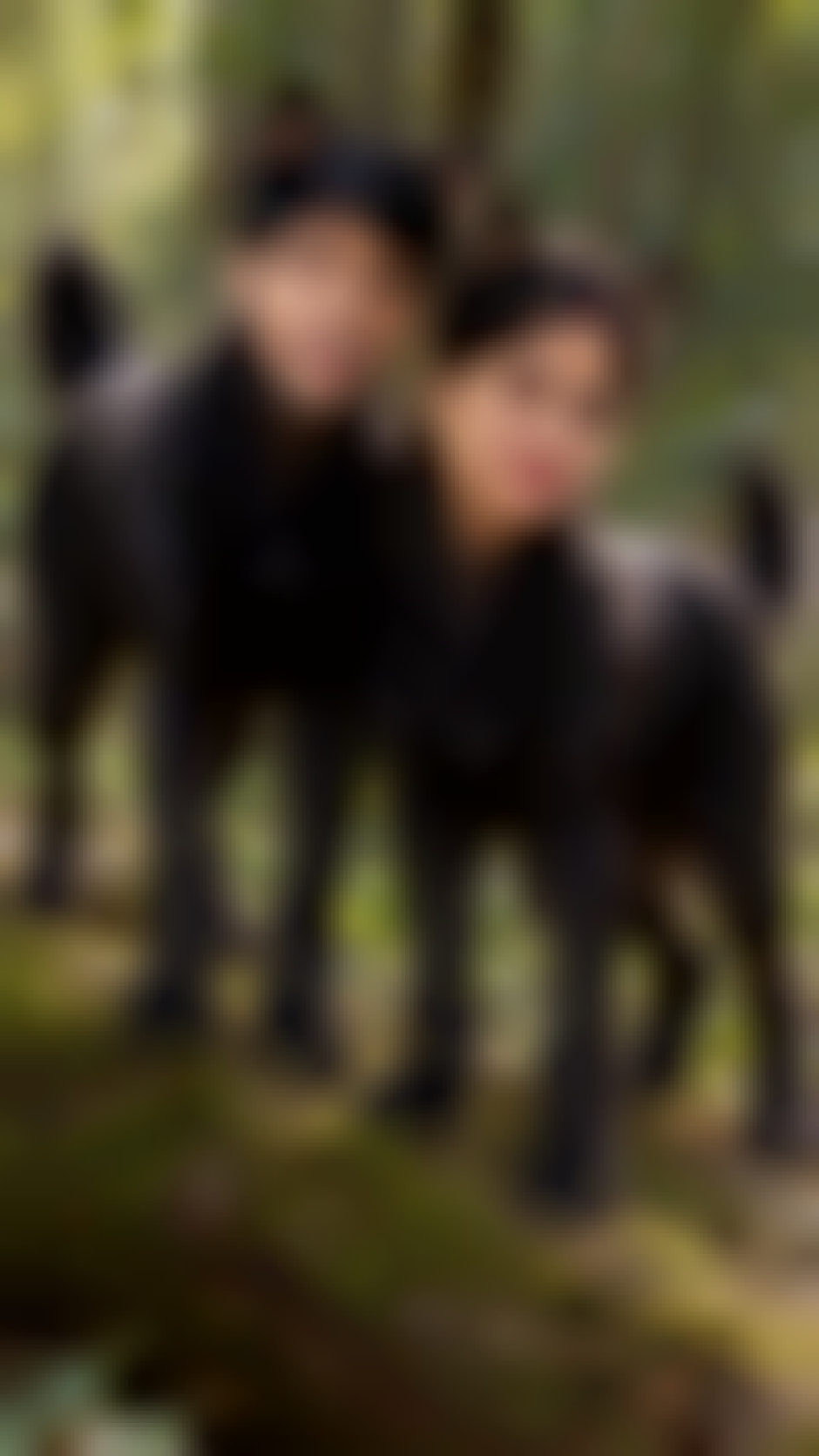
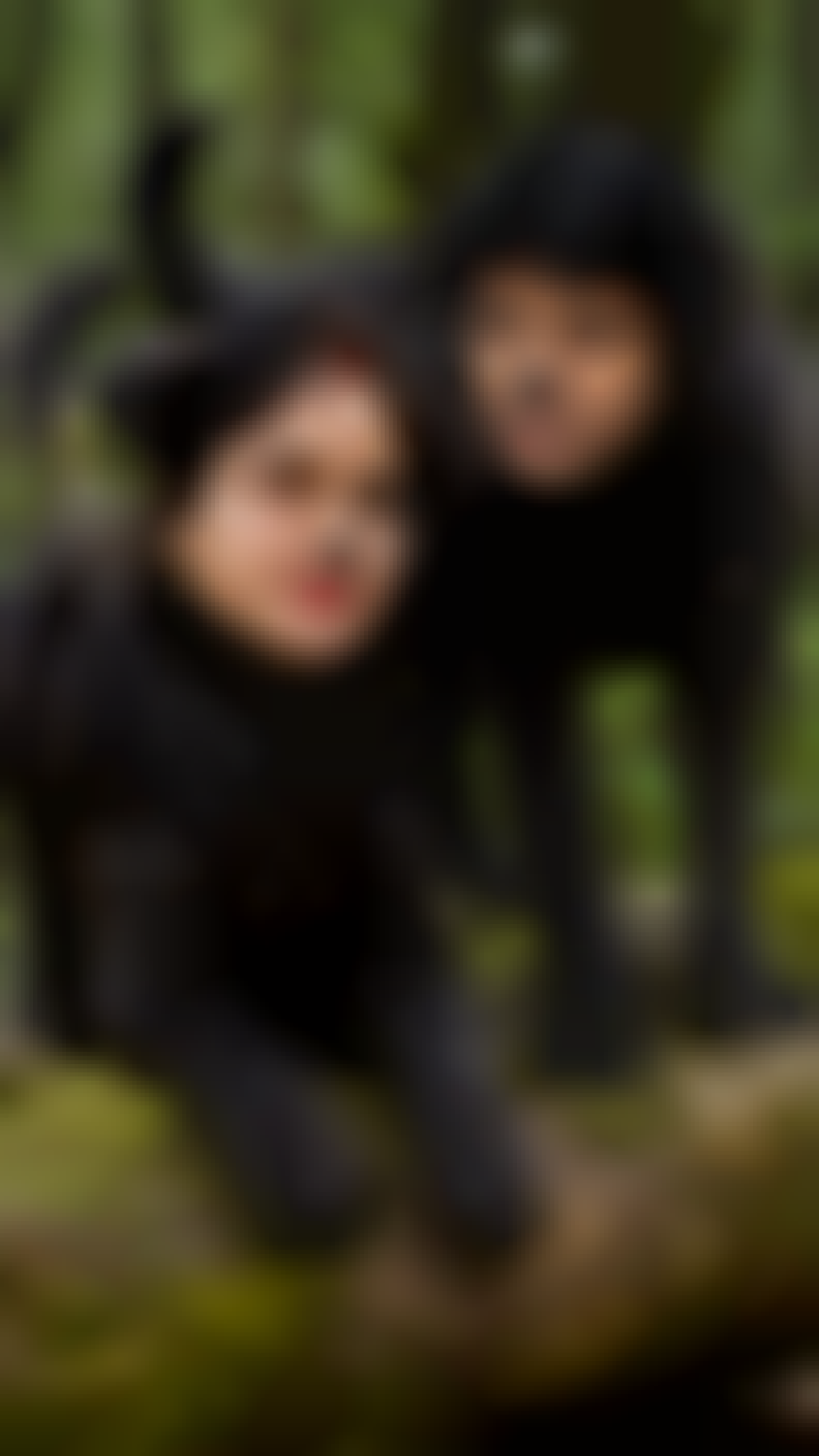
ULTRA-PHOTOREALISTIC IMAGE GENERATION PROMPT — MALE & FEMALE DOG-HUMAN HYBRID COUPLE
STRICT FACIAL IDENTITY PRESERVATION · BIOLOGICAL HUMAN-CANINE FUSION · FULL QUADRUPED CANINE ANATOMY · NO HUMAN HANDS · NO HUMAN LEGS · TWO CHARACTERS · VERTICAL 9:16 · ULTRA-PHOTOREALISTIC NATURE PHOTOGRAPHY
1. Primary Objective
Create an ultra-photorealistic, full-body vertical 9:16 photograph featuring two adult human-canine hybrids: one male dog-man and one female dog-woman. Both characters must have realistically integrated human faces and anatomically complete, four-legged canine bodies.
The transformation must look biological and seamless, as if each character naturally evolved as a human-canine hybrid rather than wearing a costume. Both characters must have four canine legs, realistic canine paws, natural fur, and authentic dog-like body posture.
Absolutely no human arms, human hands, human fingers, human legs, or human feet. The human anatomy is restricted to the recognizable facial region, naturally integrated into each character's canine head and body.
2. Female Dog-Woman — Facial Identity and Appearance
Use the uploaded photograph as the primary facial identity reference for the adult female character. Preserve her recognizable facial structure, natural skin tone, human eyes, nose, lips, and distinctive facial characteristics as faithfully as possible.
Her expression is gentle and affectionate, with a soft, natural smile. Her black hair is swept into a high bun, with a few short, subtle sensory hairs blending naturally around the canine head.
Her human face transitions seamlessly into a realistic black canine head, with naturally integrated canine ears, a refined muzzle, a moist black nose, and fine black fur around the cheeks and jawline. Maintain recognizable human facial features without creating a mask-like appearance.
Her body is entirely quadrupedal, with a sleek, anatomically believable canine torso covered in glossy black fur. Four muscular canine legs emerge naturally from the shoulders and pelvis, with realistic joints, paws, claws, and individual fur strands.
The female character has a graceful, feminine canine silhouette, natural proportions, and a healthy, athletic build. Her tail extends naturally from the rear of her canine body.
3. Male Dog-Man — Facial Identity and Appearance
Beside the female character stands an adult male dog-man with a masculine, mature appearance and a calm, friendly expression.
His head combines recognizable human facial characteristics with realistic canine anatomy. He has expressive human eyes integrated naturally into a dog-like face, a defined canine muzzle, a moist black nose, realistic canine ears, and short, dense black fur.
His canine body is strong, athletic, and proportionate, covered in detailed black fur with subtle variations in texture and natural highlights. His shoulders, back, chest, hips, and four powerful legs follow believable quadruped canine anatomy.
His four legs terminate in realistic canine paws with individually defined toes, natural claws, and visible fur between the digits. A natural canine tail extends from the rear of his body.
His appearance must be distinctly masculine without exaggeration. His expression is affectionate and relaxed as he looks toward the female character or gently toward the camera.
If a separate male facial reference is supplied, use it to preserve his recognizable facial identity. Do not substitute the female's face for the male's face.
4. Essential Biological Anatomy — No Human Limbs
Both characters must have fully quadrupedal canine locomotion.
- Exactly four canine legs per character: two front legs and two hind legs.
- All four legs must be covered in natural canine fur and connected to anatomically appropriate shoulder and pelvic structures.
- Front legs must have canine forelimb joints, wrists, paws, and claws.
- Hind legs must have realistic canine thigh muscles, knees, hocks, paws, and claws.
- Both characters must stand or crouch naturally on all four paws.
- Their human facial features must not create any additional human limbs or human torso structures.
- No human hands, palms, fingers, fingernails, human arms, human legs, human knees, or human feet.
- No upright human posture, no bipedal stance, and no human hands touching the ground.
- No duplicated paws, missing limbs, malformed joints, or extra appendages.
Their bodies must read unmistakably as four-legged canine creatures with naturally integrated human facial identities.
5. Pose and Interaction
Position the male and female hybrids together on a moss-covered fallen tree in a lush, dark forest.
The female character is crouching gracefully on all four canine legs, with her front paws resting naturally on the textured bark. Her head is turned slightly toward the camera, displaying her recognizable human facial features and soft smile.
The male character stands or crouches beside her on all four legs, his body angled slightly toward her. He looks at her affectionately before turning his gaze toward the camera.
Their shoulders may touch gently, conveying companionship and a natural bond. Their tails, ears, paws, and body posture should remain anatomically consistent with realistic canine behavior.
Keep both characters completely visible, from the tops of their heads to the tips of their tails and all four paws. Avoid overlapping their legs in ways that obscure the correct anatomy.
6. Fur, Skin, and Surface Detail
Render exceptionally detailed black canine fur, including individual strands, layered underfur, subtle directional growth, and realistic variations in sheen.
Preserve natural human skin texture across the visible facial regions, including fine pores, realistic highlights, subtle skin imperfections, and lifelike eye reflections.
The transition between human facial skin and canine fur must be smooth, anatomically plausible, and naturally blended. Avoid visible seams, artificial masks, exposed mechanical structures, or costume-like boundaries.
Add subtle environmental moisture to the fur, realistic reflections on the canine noses, and tiny water droplets on nearby moss and tree bark.
7. Forest Environment and Lighting
Create a richly detailed woodland environment with a moss-covered fallen tree, damp bark, soft green moss, scattered leaves, and a dark, naturally blurred forest background.
Use soft natural daylight filtering through the canopy, gentle rim lighting around the black fur, realistic ambient occlusion, and subtle highlights along the contours of both characters.
The black fur must retain visible detail instead of disappearing into the shadows. Use a balanced exposure with lifelike colors, realistic depth, and a natural photographic atmosphere.
8. Camera and Composition
- Aspect ratio: vertical 9:16.
- Composition: full-body, both characters visible together.
- Camera angle: low, natural wildlife-photograph…